


Description:
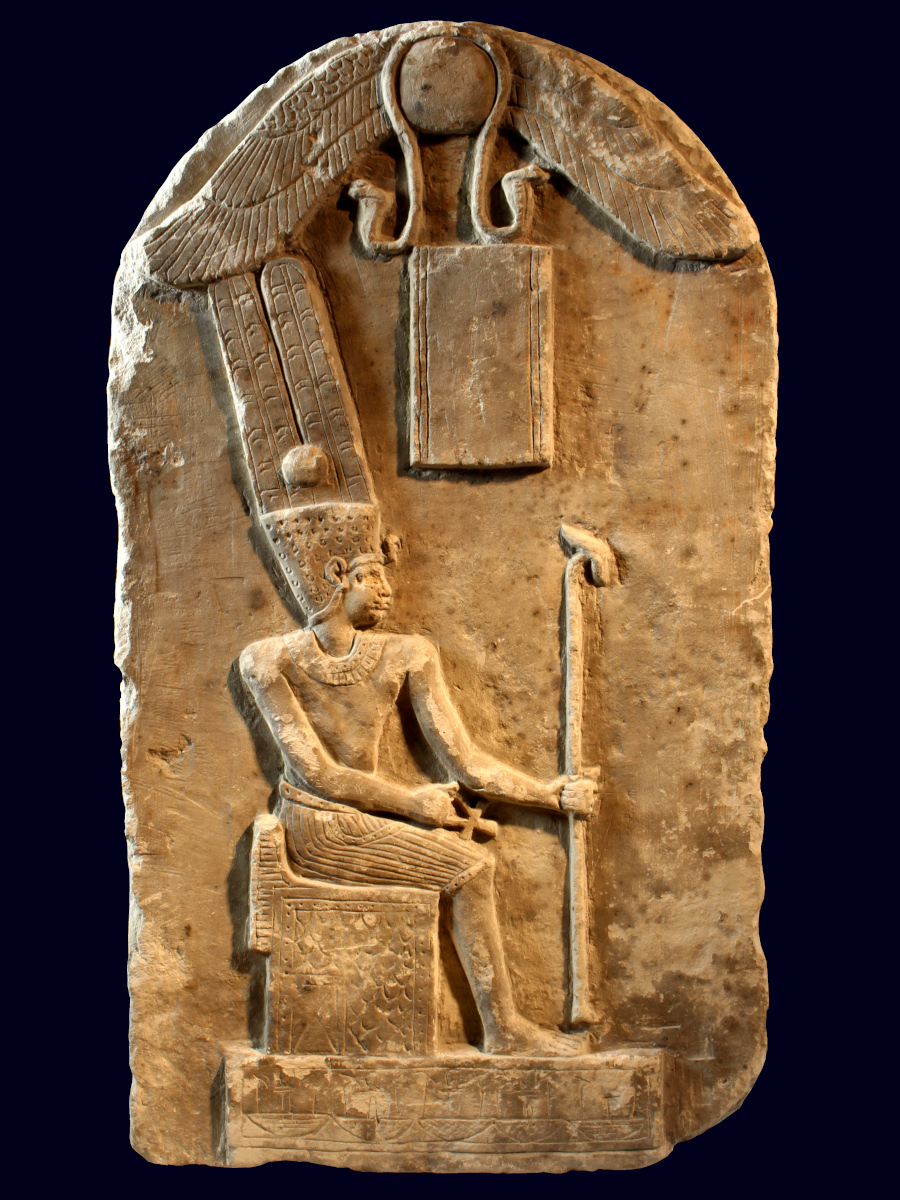
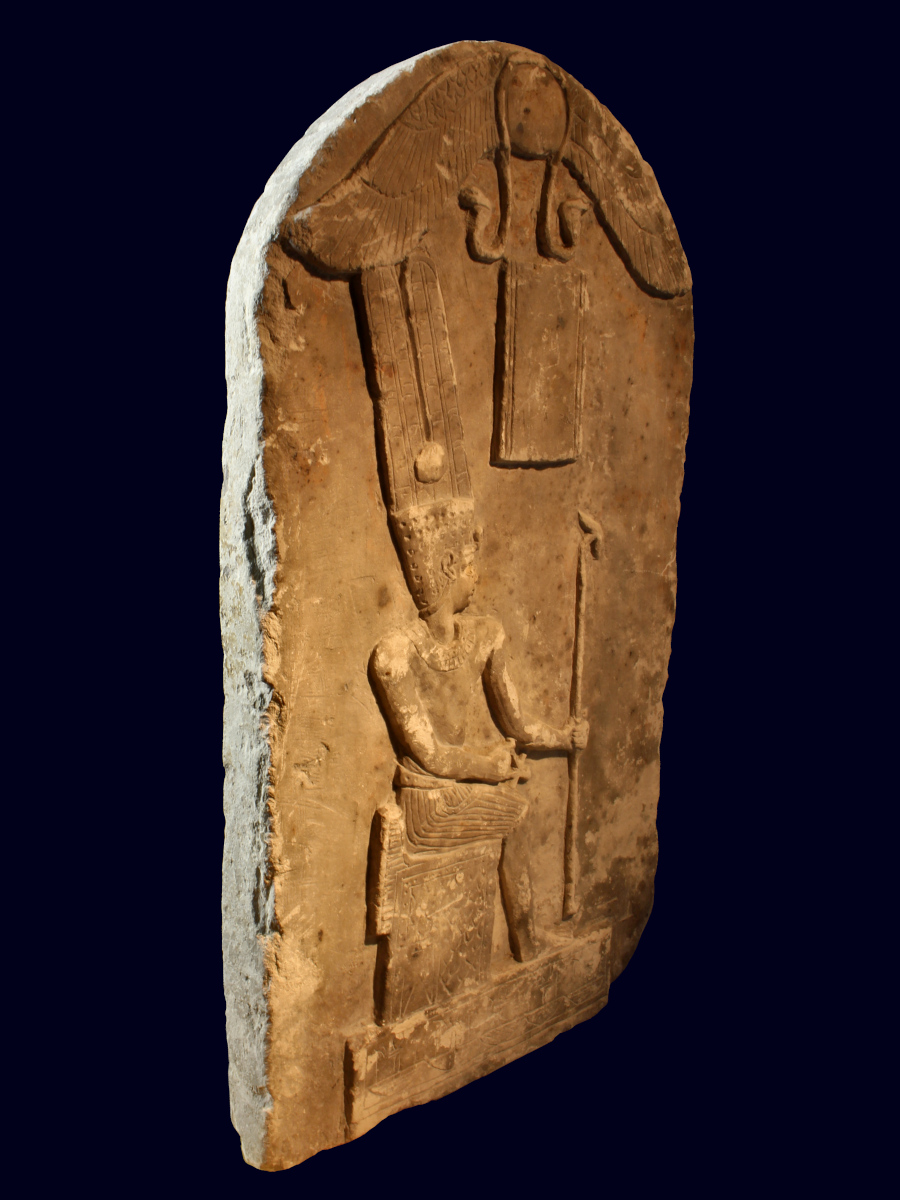
An important limestone stela with a rounded top, depicting in raised relief the god Amun-Re, king of the gods, seated on a throne. He wears a striped shendit (short skirt), and around his neck a collar is visible. On his head he has his typical crown, which is similar in shape to the red crown, and is topped with two tall feathers and a solar disc at the base, illustrating Amun’s origin as god of the air and his link to the sun god, which can also be seen in the frequent appellation Amun-Re. The crown itself is decorated with many small dots, and a uraeus is visible on the forehead of the god.
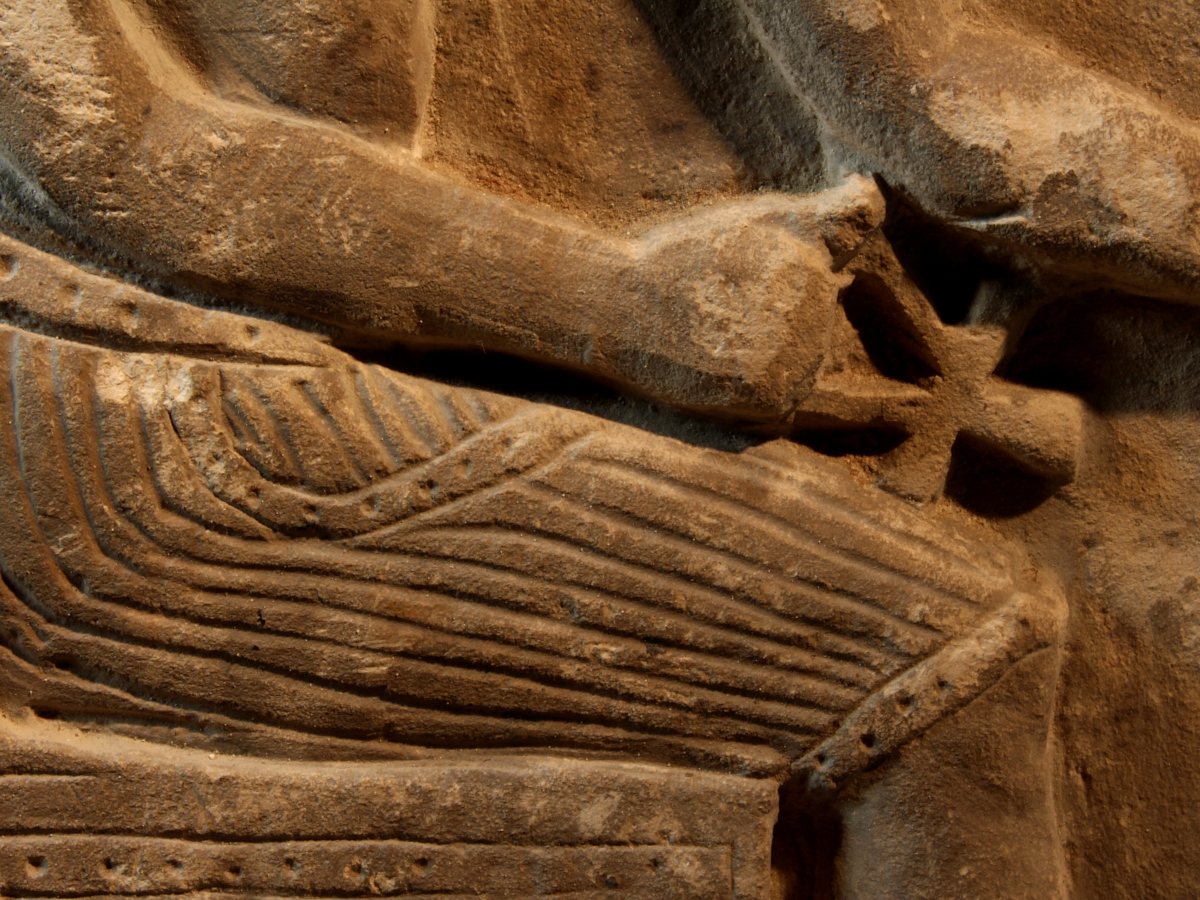
In his right hand the god holds an ankh (symbol of life) and in his left hand he holds a large was-sceptre (symbol of power and authority). Both symbols are also repeated on the dais below.
Above the god, next to the feathers, is a rectangular area (sometimes indicated, not quite correctly, as a tabula), designed to contain a short inscription, which was usually the name of the god in question; the area is now empty, but possible the text was originally painted or written and was later erased or lost, as were the colours on the rest of the stela.
The whole scene is covered in the lunette with a solar disk which is winged and has two pendant uraei. This scene, typical on many stelae and reliefs, depicts the god Horus of Edfu; often he is indicated as "the Behedite, Lord of the Sky".
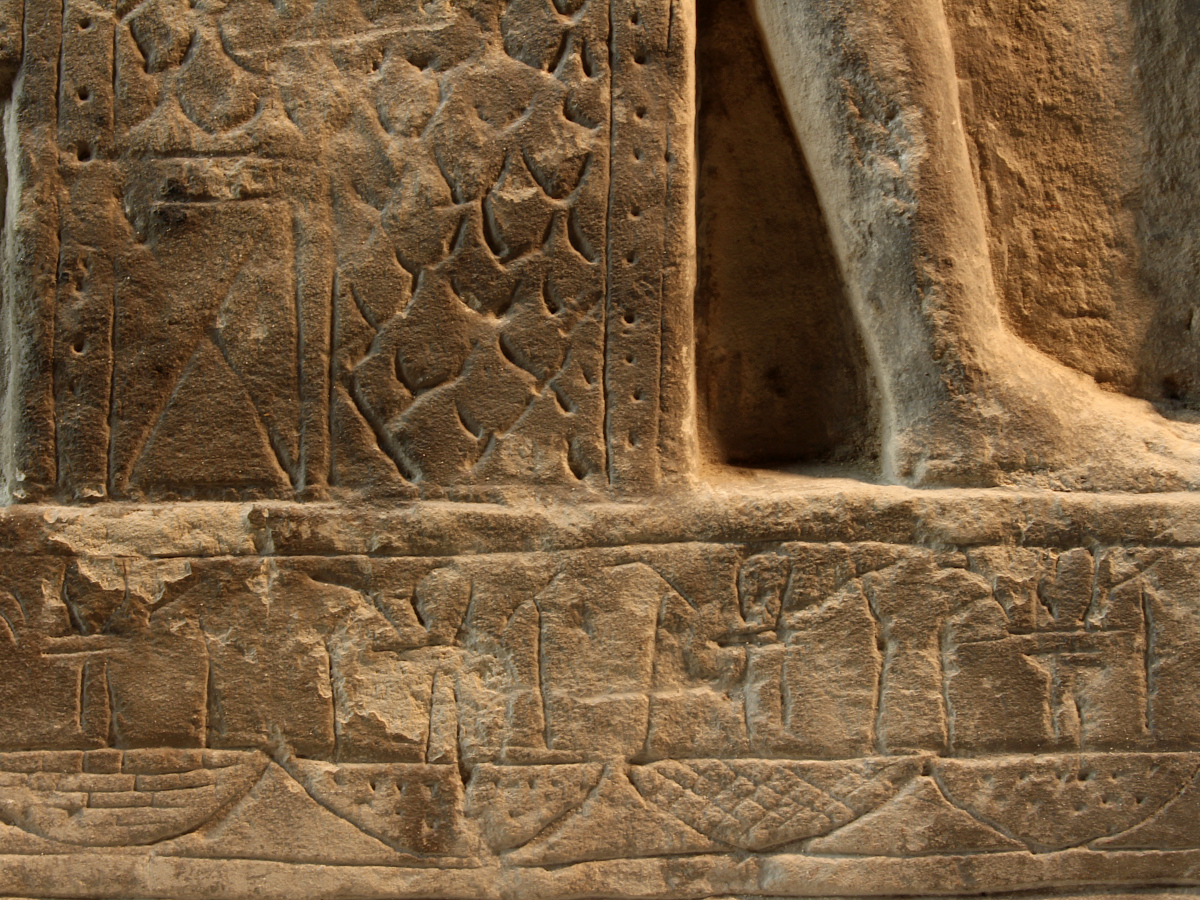
The throne has beautifully decorated sides, and below it we can see the dais on which it stands; it is decorated with symbolic imagery, consisting of a series of neb-baskets on which an ankh-sign is framed by two was-sceptres, the combination reading "all life and dominion", further reinforcing the god's authority.
Background information:
In all probability Amun originally was a god of the air; his name means "the hidden one". One of the ways in which he was invoked in the New Kingdom was "Lord of the Breath of Life".
The god was especially linked to Thebes, where he rose enormously in importance during the Middle Kingdom. Here he was part of a triad with his consort Mut and their son Khonsu. But Amun also had links with other important gods, for example with the sun god Re in the frequent appellation Amun-Re.
Because of the political rise of Thebes, its deity Amun was able to become king of the gods (Amonrasonther, in Egyptian Imen-Ra nesut netjeru, "Amun-Re, king of the gods"). And as the power of the king was waning at the end of the Ramesside Period, a divine state was created in Thebes under the leadership of Amun.
In Hermopolis the primeval Ogdoad (group of eight gods) had Amun as one of its members; he and his female counterpart Amaunet represented the hidden element. Through priestly speculation Amun became the chief god and even the begetter of the Ogdoad, which was then considered to be the shape of Amun.
Comparative literature:
Ahmed Bey Kamal, Stèles ptolémaïques et romaines, I - Texte; II - Planches (Catalogue général des antiquités égyptiennes du Musée du Caire, No. 22001-22208) (Le Caire, Imprimerie de l'Institut français d'archéologie orientale, 1904).
Dating:
Ptolemaic to Roman Period, third century B.C. - first century C.E.
Size:
Height circa 40 cm.
Provenance:
French private collection Mrs A., Paris, acquired on 27 December 1982 from Jean et Huguette Ramié, Cannes, France; with the original certificate of Ramié, which contains a photograph of the object and names J-L Despras, 5 Rue des Saint Pères, Paris as the expert.
Condition:
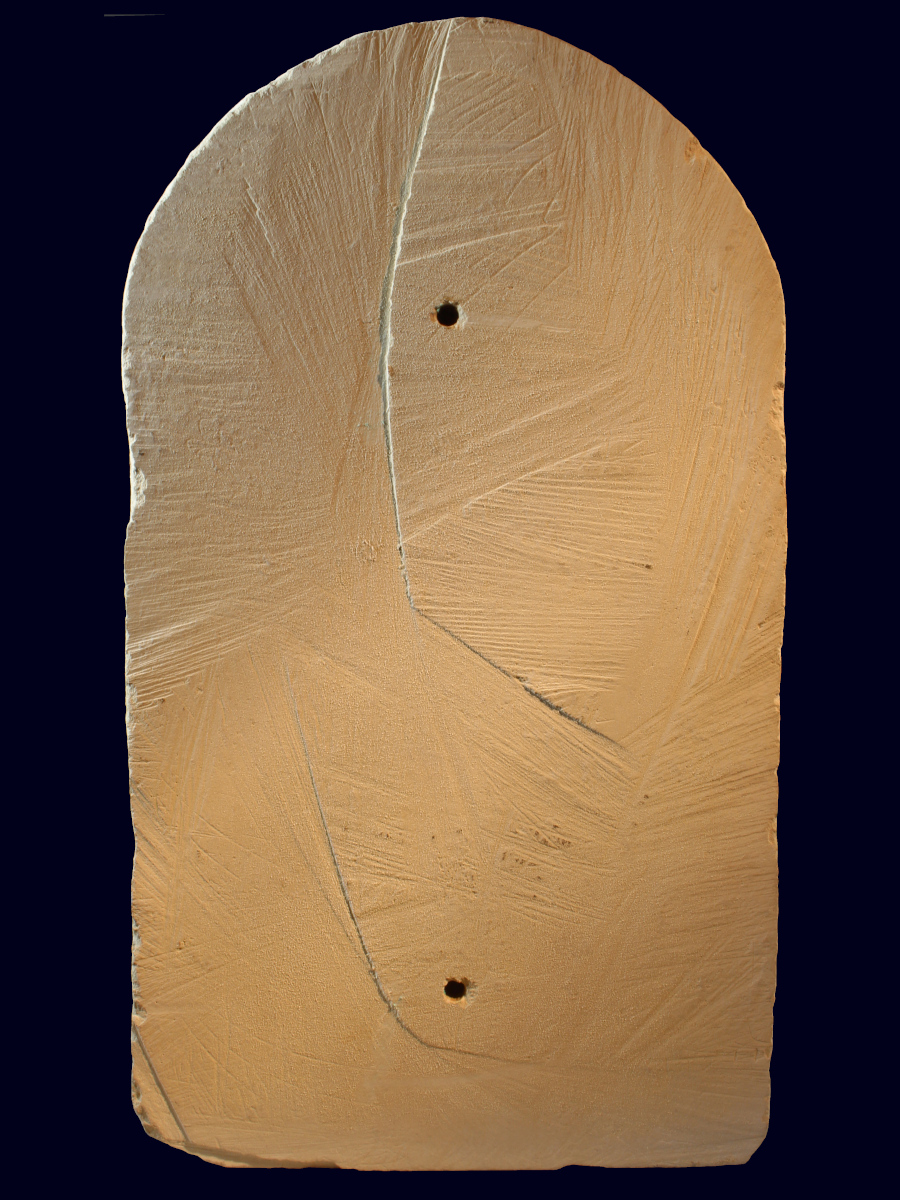
The stela shows some minor chipping and is slightly abraded, with encrustation; chipped around the edges; two holes drilled in the backside, probably to hang the stela on the wall in a frame.
Price:
€ 18,000
Stock number:
E2514